
Standard and custom load cells
Gicam has been designing and manufacturing load cells in Italy for more than twenty-five years. The range includes over 100 standard models (compression, tension, shear beam, bending beam, single point, pin, roll and pulley load cells) with capacities from 0.6 kg up to 1500 t, plus custom-designed cells for applications that catalogue models cannot cover.
- Capacities from 0.6 kg to 1500 t
- ATEX, IECEx and OIML certified versions
- ISO 9001 certified quality
- Custom cells, even in small batches

Types of load cells
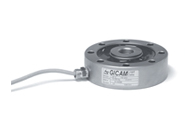
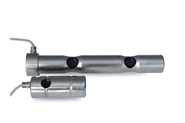
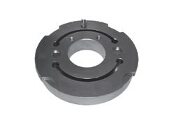
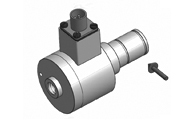
Choose the type according to how the load is applied and the system you are building. Each product page lists capacities, technical specifications, connections and downloadable documents.

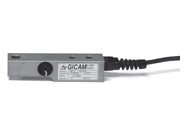
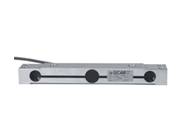

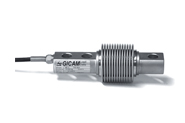
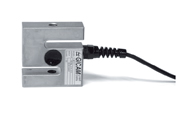
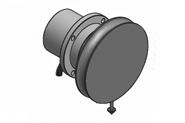
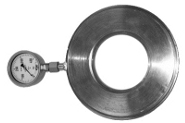
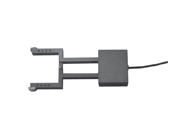

How to choose a load cell
A few details about the application are enough to find the right cell:
- Load type: compression (silos, tanks, weighbridges), tension (suspended loads, tie rods), bending or shear (platforms and scales), tension on a roll or pulley.
- Capacity: add the maximum load to the tare (structure, container, fittings), divide by the number of cells and add a margin for shocks, overloads and uneven load distribution.
- Accuracy: legal-for-trade weighing requires OIML certified cells of a suitable class; for process control a standard cell is often enough.
- Environment: IP protection class, stainless steel for wet or aggressive environments, ATEX or IECEx versions for explosive atmospheres, high-temperature versions.
- Output signal: mV/V cells connected to an indicator or transmitter, or amplified cells with analogue or IO-Link output connected directly to the PLC.
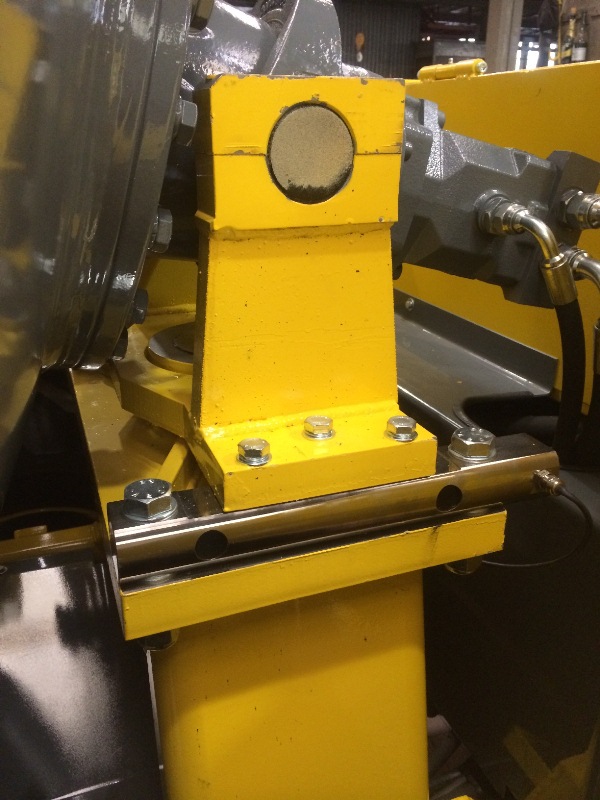
- Mounting: the right mounting kit prevents side loads and torsion, the most common cause of unstable readings.
Detailed instructions are in the load cell installation and user manual (PDF). If in doubt, tell us about your application and we will recommend the model.
Custom load cells
When a catalogue model is not enough, we design the cell around the application: shape and fittings, capacity, material, cable and connector, output signal. We build amplified and high-temperature cells, produce small batches at competitive prices and carry out strain gauge installation, calibration and testing on mechanical parts supplied by the customer.
Certifications and quality
Gicam operates an ISO 9001 certified quality system. Many cells are available in ATEX and IECEx certified versions for installation in potentially explosive atmospheres, and several models hold an OIML R60 certificate for metrological applications. All certificates can be downloaded from this website.
Where Gicam load cells are used
- weighing of silos, tanks and hoppers
- scales, platforms and weighbridges
- lifting: cranes, hoists, overhead cranes and load limiters
- dosing, packaging and food machinery
- presses, test benches and industrial automation
- tension measurement on textile, converting, paper, plastics and rubber machines
- steel, marine and automotive industries
- geotechnics: tie-backs, anchors and structural monitoring
Electronics for load cells
To complete the weighing system Gicam supplies transmitters, weight indicators, repeaters and converters with analogue, serial, fieldbus, EtherNet/IP and IO-Link outputs, as well as complete weighing systems.



What is a load cell and how does it work
A load cell is a transducer that converts a force (a weight, a pull, a push) into a proportional electrical signal. It consists of a steel or aluminium body, designed to deform elastically and repeatably under load, and of strain gauges bonded where the deformation is greatest.
The strain gauges are wired in a Wheatstone bridge: when the body deforms their resistance changes and the bridge outputs a signal of a few millivolts per volt of excitation (typically 2 mV/V at full scale). A transmitter or weight indicator amplifies the signal, converts it into engineering units and passes it to the PLC or display.
Load cell FAQ
Planning a new application?
Tell us about the load, environment and required signal: we will suggest the right catalogue model or a custom cell.