
Geotechnical load cells TOR-IDRA/M
Download PDF datasheet
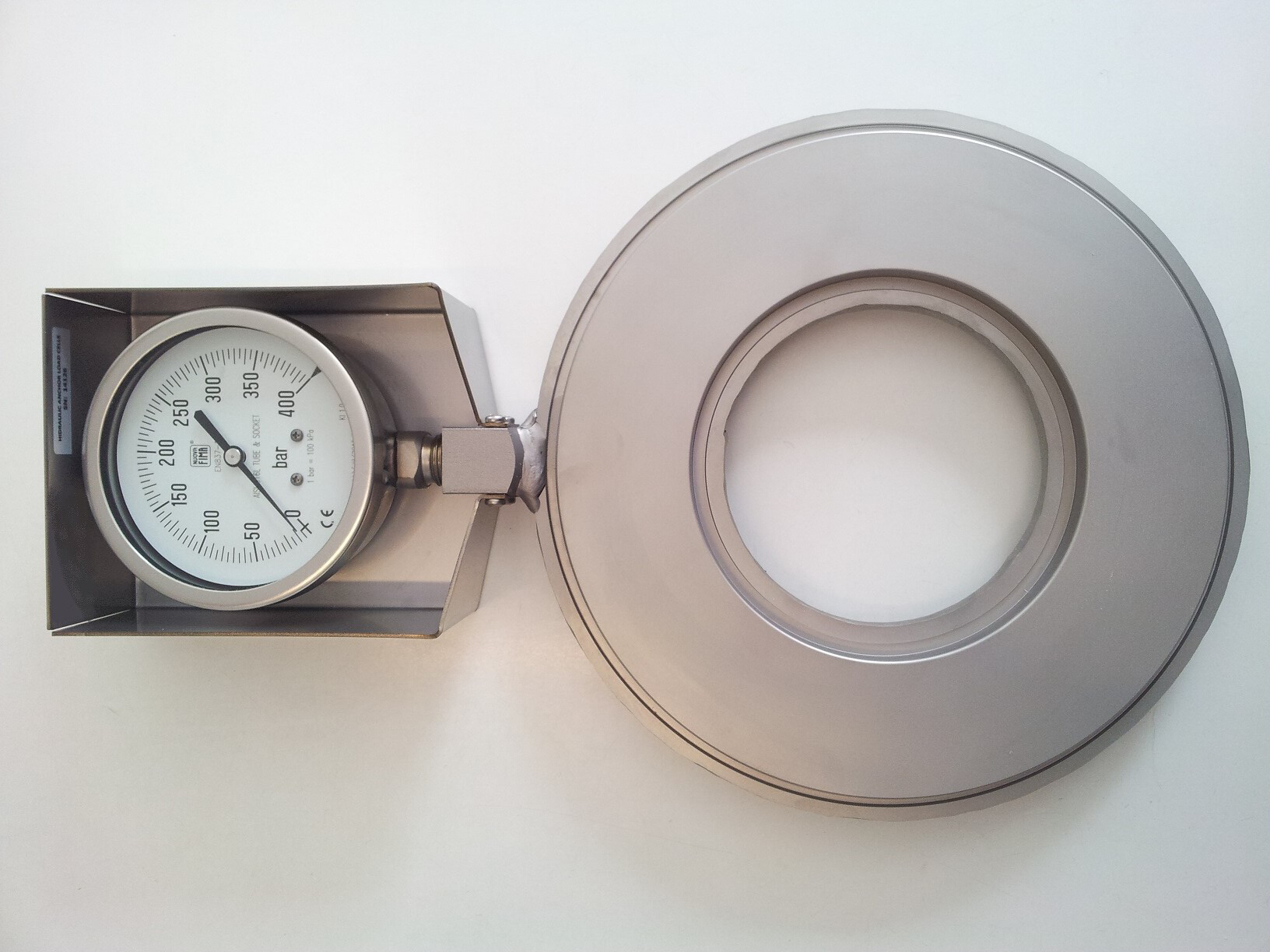
The toroidal hydraulic load cell TOR-IDRA/M measures changes in workload on rods and anchors subjected to tension, allowing in this way to evaluate carefully the possible losses for release during exercise or pressure increases, due to thrust on the ground containment structures.
The cell consists of two steel plates of a circular shape, with a central hole to allow the passage of the strands, machined and welded together in such a way as to create an interspace filled by a special oil and connected to a precision pressure gauge on which you can directly read the value of the load in KN.
| Model | FS (t) | A (mm) | B (mm) |
| 1 | 100 | 115 | 265 |
| 2 | 150 | 150 | 320 |
| 3 | 220 | 210 | 405 |
Click on the image to enlarge

Technical specifications
| Material | Stainless steel |
|---|---|
| Nominal load | 1000, 1500, 2200 kN |
| Operating temperature | -20 / +70°C (-4 / +158°F) |
| Temperature deviation zero | 0,4 %/°K deviation from 20 °C |
| Protection class | IP 67 |
| Type of pressure gauge | Analog Bourdon spring scale in kN |
| Pressure gauge diameter | 100 mm |
| Pressure gauge body | Stainless steel |
| Pressure gauge junction | Stainless steel |
| Precision class | 1.0 |
For complete and up-to-date technical specifications please refer to the datasheet you can download here
Download PDF datasheet Load cell mounting
General guidelines for installing and mounting load cells:
- Respect the direction in which forces are applied to the load cells
- Do not exceed the temperature limits shown on the rating plate
- Do not remove the labels from the cells
- Protect cables properly with sheaths or cable ducts
- Connect each cell to earth with a suitable cable, bridging the plates of the mounting accessories if necessary
- Do not weld on the mechanical structure once the cells are in place
- Avoid or minimise mechanical constraints between the fixed structure and the weighed structure, to prevent weighing errors and zero return problems
- When vibrations or dynamic loads are present, protect the cells with anti-vibration mounts
- Protect the cells from dust build-up with suitable covers